
A personal reflection by Zainib, founder of Wellnest
Graduating from Cambridge Muslim College was about much more than completing a postgraduate program. It was a year of questioning, learning, unlearning, grief, connection, and rediscovering what healing means to me, both personally and as a practitioner.
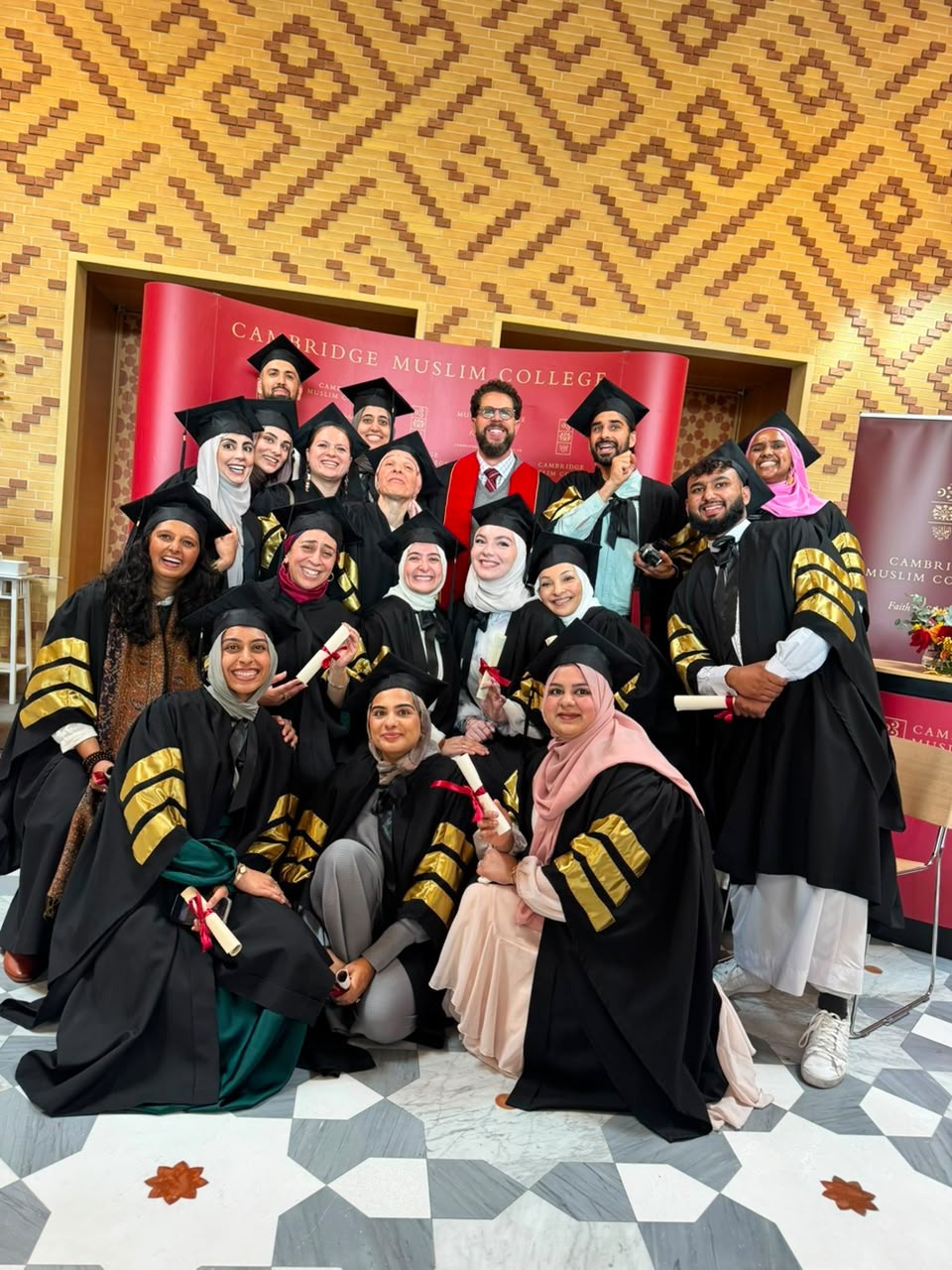
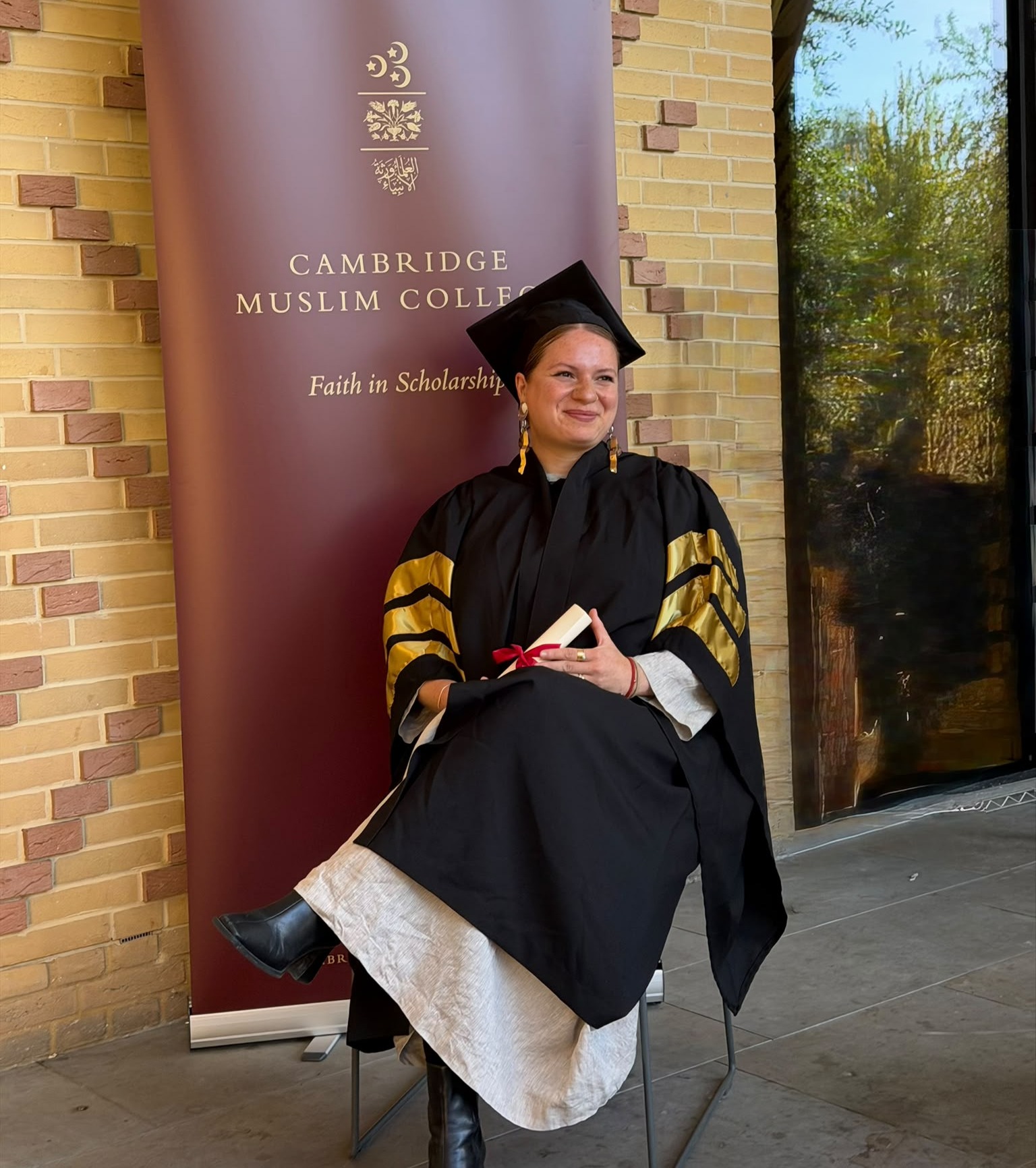
When I arrived in Cambridge for graduation, I was surrounded by people I had spent an entire year learning alongside, but had never fully experienced in person. We had shared so much of ourselves through a screen. To finally sit together, see one another, and feel the presence of this community was surreal.
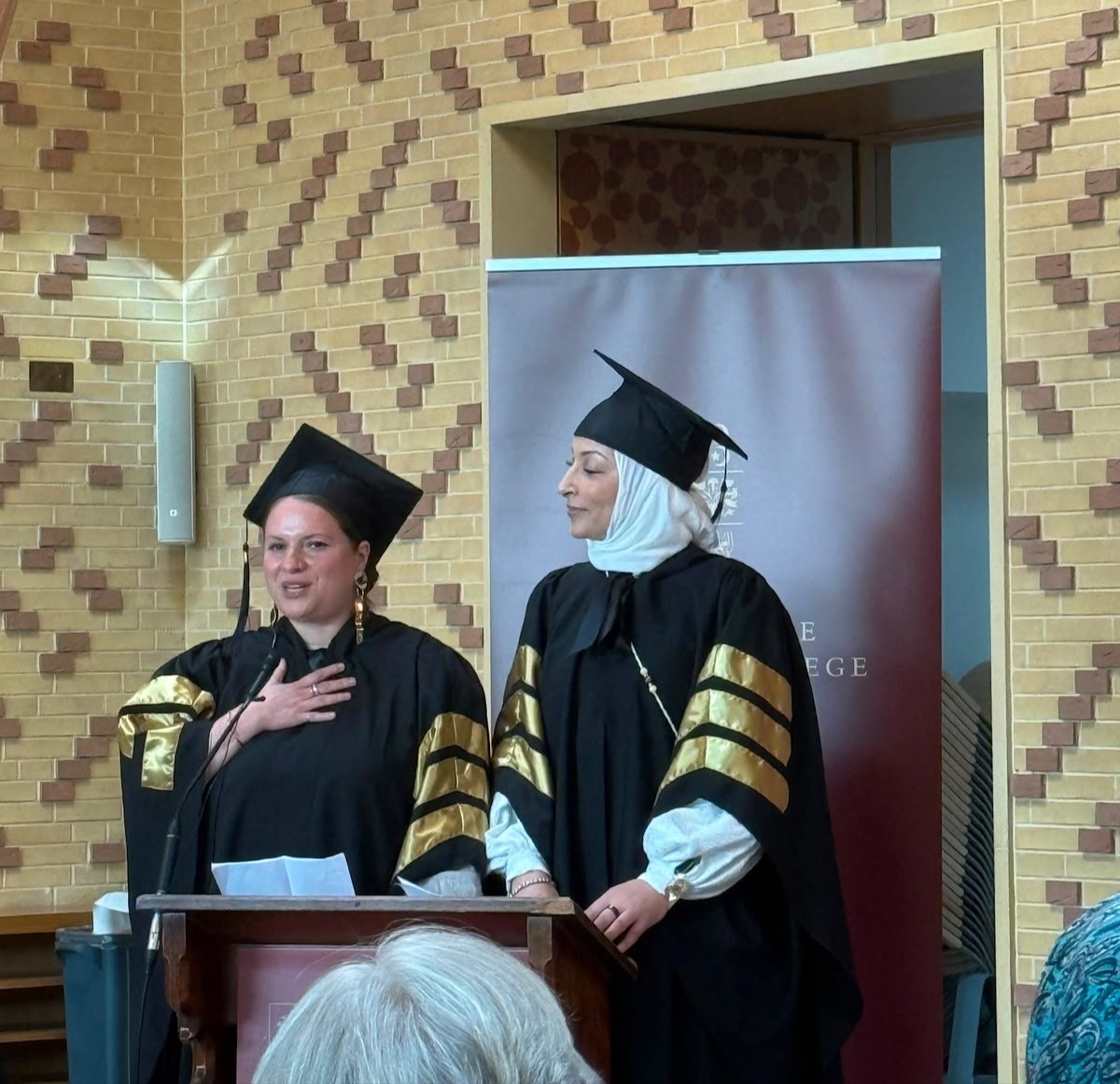
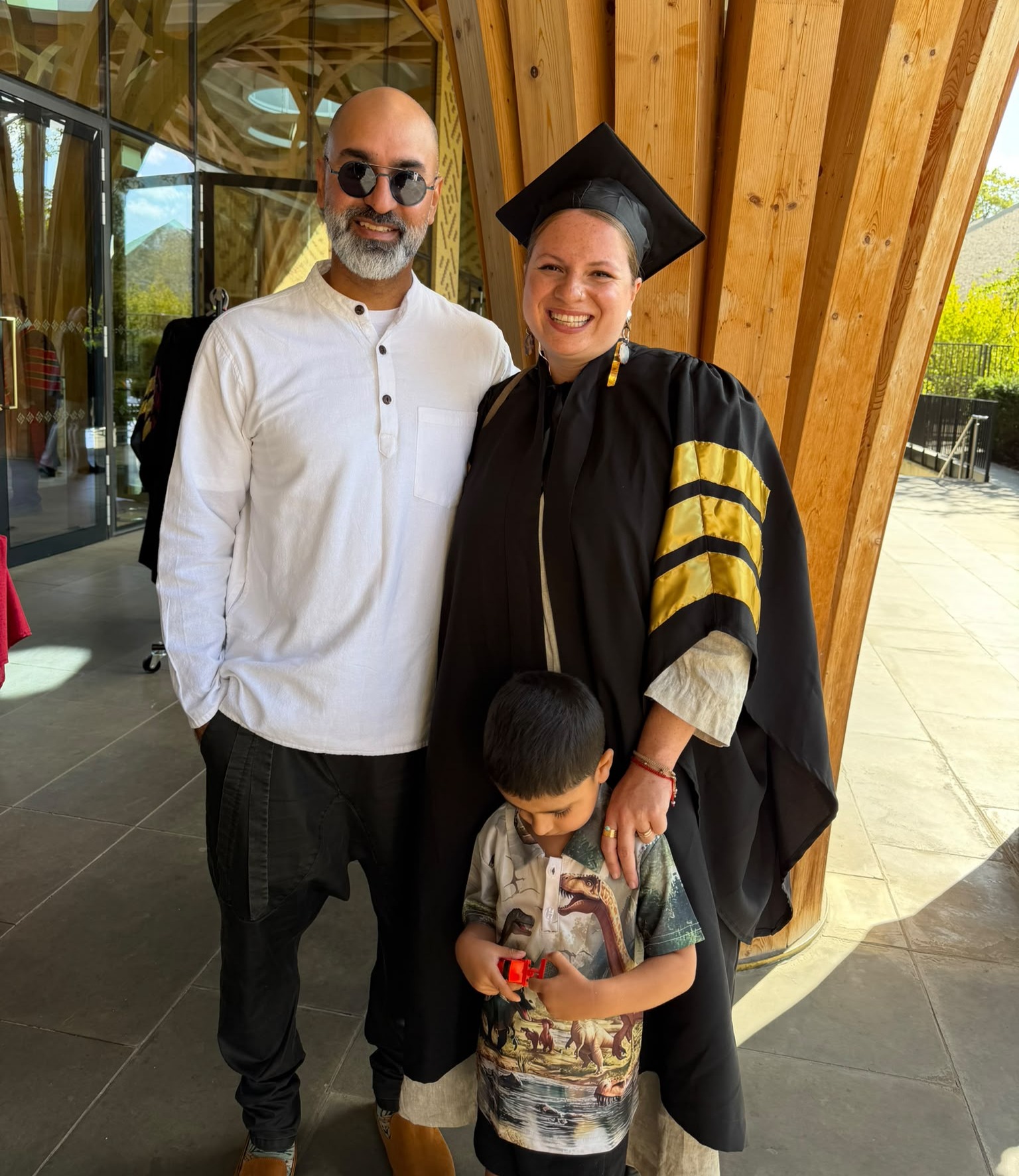
My son was there to witness it. My husband, who had supported me throughout the journey, was there too. And as I stood before my cohort to deliver a graduation speech with a dear friend, I experienced something I had been searching for long before I began the programme.
A sense of wholeness.
I had begun this journey with questions about my practice, my connection to tradition, and the ways we understand healing in the modern world. I was leaving with a much greater sense of clarity, belonging, and responsibility.
But getting there wasn't a straightforward process.
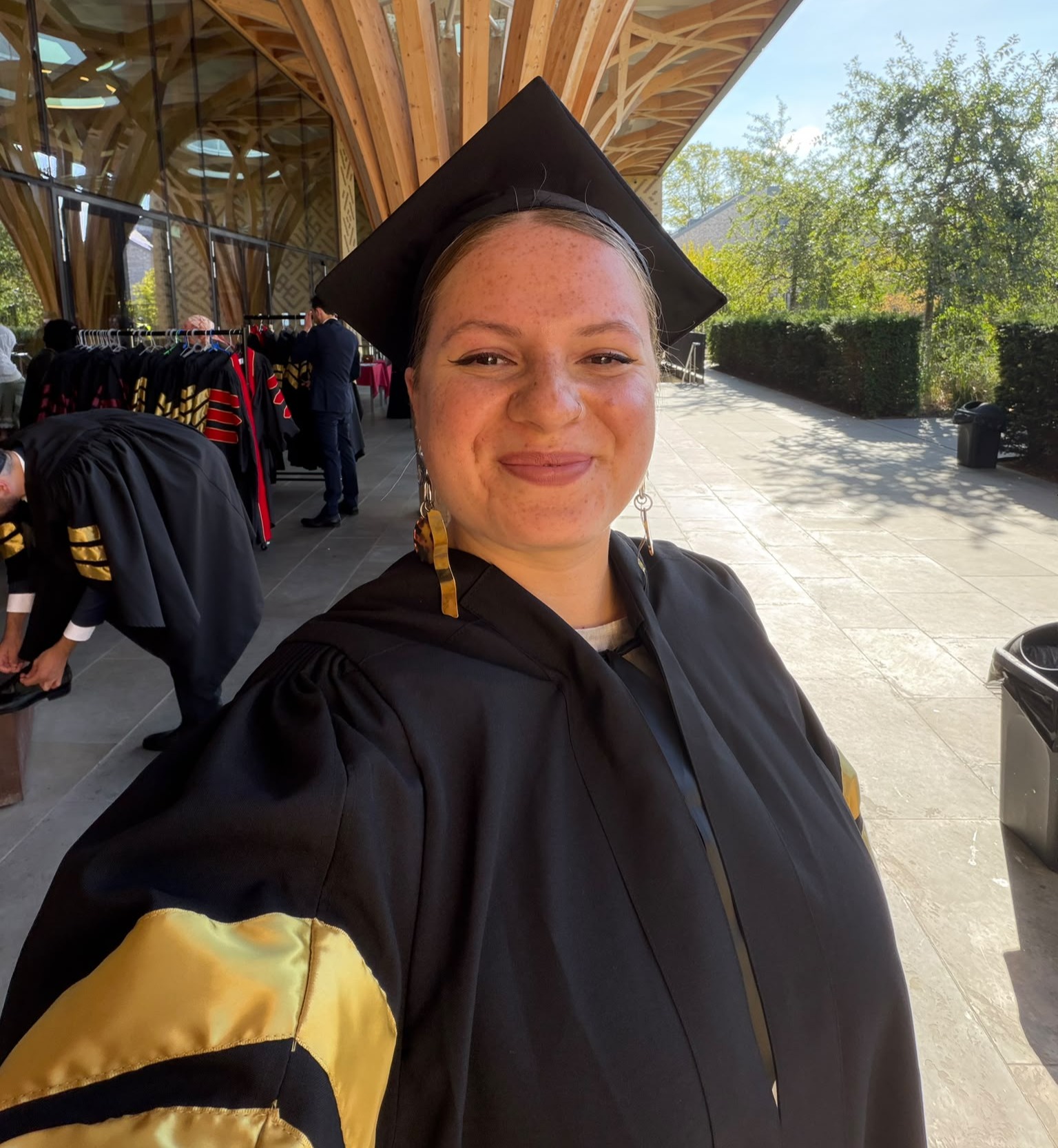
As a therapist, I've spent years supporting people through their emotional experiences, relationships, difficult memories, and the patterns that can make everyday life feel overwhelming.
At Wellnest, we see how often emotional difficulties are intertwined with the ways people have learned to relate to themselves and the world around them.
Someone might come to therapy because they're feeling stuck in life, but as we begin to explore their experience, we may discover deeper questions about identity, belonging, expectations, and how they understand themselves.
Others may be struggling with relationship anxiety, feeling disconnected from their needs, or carrying the weight of experiences they haven't had the opportunity to process.
These experiences aren't always separate from the broader cultural, spiritual, and familial contexts in which we live.
And this is something I wanted to understand more deeply.
Over time, I became increasingly interested in the relationship between modern approaches to therapy and the wisdom traditions that have understood human suffering and healing for generations.
In particular, I wanted to reconnect with an understanding of psychology rooted in the Islamic tradition, one that considers the human being beyond isolated symptoms, thoughts, and behaviours.
I was looking for a way to integrate these perspectives into my personal understanding of healing and my professional practice.
What I didn't fully anticipate was how much the process would require me to look inward.
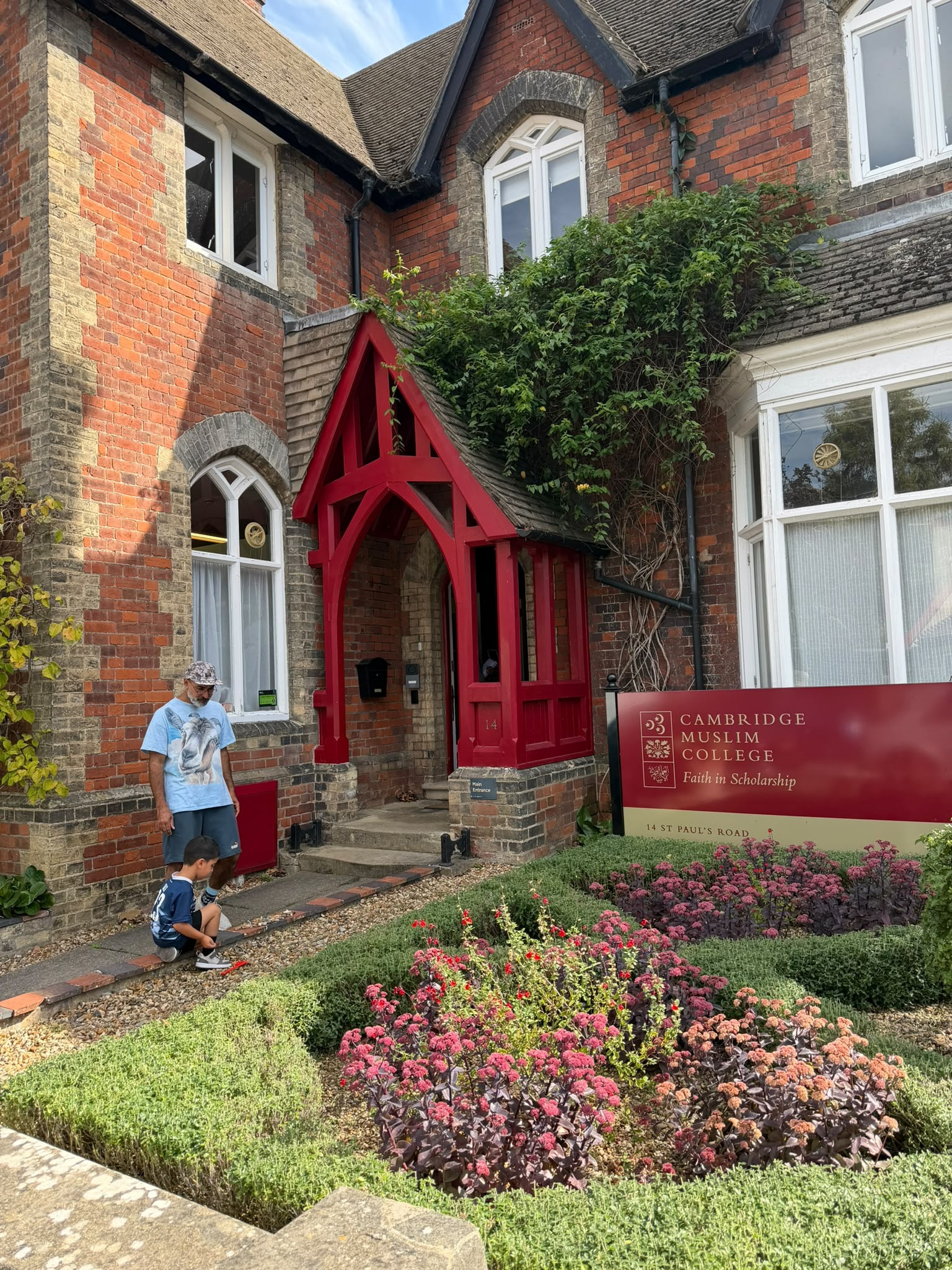
I enrolled in Cambridge Muslim College's Islam and Psychology program, a year-long journey exploring psychology through the Islamic tradition and contemporary psychological perspectives.
The program brought together academic inquiry, spirituality, philosophical questions, and practical approaches to understanding human nature.
Learning in this environment meant engaging with ideas that were both familiar and unfamiliar. Some concepts gave language to things I had felt for a long time. Others challenged assumptions I had developed through my previous education, professional training, and personal experiences.
As a practitioner, you're accustomed to being the person who holds space for other people's questions.
Returning to formal study meant becoming a student again.
It meant allowing myself to encounter ideas I didn't immediately understand and recognizing that learning can involve much more than gathering information.
Sometimes it involves reconsidering what you thought you knew.
One of the central questions I continued returning to was how our approaches to healing are shaped by the assumptions we make about what it means to be human.
In contemporary psychological practice, we have many valuable ways of understanding emotional distress. We look at behaviour, cognition, relationships, nervous system responses, and the lasting effects of trauma.
But what happens when we also make space for the spiritual dimensions of a person's experience?
How might our understanding change when we consider the individual within a broader tradition, a history, and a sense of belonging?
These were not questions I expected to answer through a single lecture or reading.
They required continued reflection, both academically and personally.
One of the most meaningful parts of this experience was recognizing that learning about healing and experiencing healing aren't always separate processes.
As the programme progressed, I was invited to examine my own experiences of disconnection and fragmentation.
There was grief in that process.
Grief for the parts of myself that had felt disconnected from tradition. Grief for an understanding of healing that has been lost, overlooked, or separated from the communities that carried them.
I had to allow myself time to sit with those feelings rather than immediately trying to move beyond them.
That's something I often think about in relation to therapy.
We live in a world that encourages us to resolve discomfort quickly. We may feel pressure to understand an experience, develop an action plan, and demonstrate progress before we've had the opportunity to fully feel what is happening.
That pressure can become particularly difficult when we're already experiencing productivity anxiety or the emotional exhaustion that comes from constantly evaluating whether we're doing enough.
In therapy, people sometimes recognize familiar patterns, such as validation seeking, conflict avoidance, or a tendency towards people pleasing. These patterns often develop within complicated relational and cultural experiences.
We can understand why they exist without expecting ourselves to change them overnight.
I was reminded of the importance of that patience during my own learning.
There were aspects of the journey that brought joy and clarity, and others that required me to remain present with grief, uncertainty, and difficult questions.
Both were necessary.
And slowly, my understanding of what it means to heal began to change.
One of the most transformative realizations came through reconnecting with the lineage of Islamic psychology.
I began to recognize that the work we were studying wasn't simply a collection of historical ideas.
It was part of a living tradition.
A tradition that our ancestors engaged with, protected, practised, and carried forward. And one that we, as students and practitioners, had a responsibility to continue engaging with.
This recognition brought a profound sense of empowerment.
It also brought joy.
After spending time acknowledging the grief associated with disconnection, I began to experience what reconnection could feel like.
I didn't have to understand myself as someone working in isolation, trying to develop answers to every question independently.
I was connected to something much larger than myself. I was firmly anchored and connected to a Divine Reality, and this felt embodied.
And that connection changed the way I understood my role as a therapist.
I began to see that healing wasn't something I needed to create or deliver entirely through my own knowledge and effort.
Instead, I could understand my work as facilitating a process in which the person seeking care has their own capacity for healing, wisdom, and growth.
That perspective is deeply connected to the spiritual principles we studied, but it also reinforced something important about how I want to practise therapy.
The person sitting across from me is not simply a collection of problems that need to be solved.
They're a whole human being with a spiritual reality. This deserved to be acknowledged and in honouring their wholeness, I found so much hope in the work and the healing space I am offering.
Everyone enters their healing journey with their own history, relationships, beliefs, strengths, wounds, and ways of making meaning.
And those things deserve to be understood together.
Another important part of the programme involved examining the assumptions that underpin contemporary approaches to psychology.
Modern therapeutic approaches provide valuable knowledge, research, and tools for supporting people through emotional distress. I continue to value these contributions in my work.
But I also became more aware of how easily a particular way of understanding mental health can become treated as the only way.
There are long standing traditions of healing that understand the person through relationships, community, spirituality, and connections to something beyond the individual self.
Some contemporary approaches to trauma therapy emphasize the body's capacity for regulation, the importance of relational safety, and the possibility of healing beyond conscious thought alone.
Studying Islamic psychology encouraged me to think more critically about how different traditions conceptualize these experiences and whose knowledge receives recognition.
For me, decolonizing my practice means remaining curious about the foundations of the approaches I use and creating room for perspectives that may have been marginalized or excluded from dominant psychological frameworks.
It doesn't mean rejecting everything I've learned through contemporary psychology.
It means developing a more expansive understanding of the person receiving care.
That distinction matters at Wellnest.
For example, someone experiencing emotional flooding may benefit from practical strategies for navigating overwhelming feelings. But understanding their experience may also involve exploring relationships, cultural expectations, spiritual beliefs, and the ways they've learned to respond to distress.
A person struggling with self-sabotage may need more than encouragement to change a particular behaviour. They may also benefit from understanding the conditions in which that behaviour developed.
And someone who carries considerable emotional labour within their family may be navigating obligations, relationships, and cultural expectations that can't be understood through an individual lens alone.
For me, the purpose of broadening my perspective is to make more room for the individual and the different dimensions of their experience.
I don't think I fully understood how meaningful graduation would feel until I was there.
For an entire year, I had been learning alongside people whose voices, reflections, and experiences had become familiar to me.
But we hadn't fully experienced one another's physical presence.
Being together in Cambridge changed that.
I could see the people who had shared this journey with me. We could sit together, talk, and recognize how much we had collectively experienced.
There was something almost surreal about finally seeing everyone in three dimensions.
What had been a community formed through online learning became a community I could physically experience.
And that made our connection feel even deeper.
It also strengthened our collective commitment to carrying this tradition forward.
One of the most memorable parts of graduation was having the opportunity to deliver a speech on behalf of our cohort alongside one of my dear friends from the programme.
Standing there, I felt the contrast between where I had begun and where I had arrived.
I had started with feelings of confusion and fragmentation.
Now I felt connected.
I felt a greater sense of belonging to the tradition behind me and to the people standing beside me.
And my family was there to share that moment.
My son had been part of this entire year of my life. My husband had supported me throughout the experience.
Having them witness graduation brought together the personal and professional parts of this journey in a way I hadn't expected.
The academic accomplishment mattered, of course.
But what stayed with me was the feeling of wholeness.
It had been a year that included both joy and pain, and I could finally appreciate those experiences as part of the same journey.
One of the clearest changes I've noticed since completing the programme is that my vision feels wider.
I feel more grounded in the work I do and more connected to the traditions that inform it.
There's a greater sense of expansiveness.
I can hold difficult experiences while also recognizing that they exist within a much broader picture of a person's life.
In therapy, we encounter so many ways that people become disconnected from themselves.
Some people find themselves repeatedly imagining fake scenarios in their head, anticipating difficult conversations or outcomes that haven't happened.
Others become caught in repetitive thinking and want to understand the causes of rumination.
Some struggle with decision fatigue, while others experience criticism sensitivity or patterns of over apologizing that make it difficult to express their needs.
People may also experience social burnout after spending long periods feeling responsible for how everyone around them thinks and feels.
These experiences are different, but they can all raise questions about our relationship with ourselves and the world.
How did we come to understand our needs?
What experiences shaped our sense of safety and belonging?
Whose expectations are we carrying?
What helps us feel connected to ourselves?
My studies reinforced the importance of remaining open to these questions rather than approaching each person's difficulties through a predetermined explanation.
They also strengthened my understanding that healing doesn't have to be limited to the removal of distress.
It can involve developing a different relationship with ourselves, our experiences, and the communities and traditions that give our lives meaning.
When I think about what this experience means for Wellnest, I don't see it as a complete change in direction.
I see it as a deepening of the work we've already been doing.
I founded Wellnest with an understanding that people deserve care that recognizes the complexity of their lives.
Emotional difficulties don't occur in isolation from family, culture, relationships, community, and current difficult times we live in.
Our approach to therapy needs to be able to make room for these experiences.
My studies have strengthened that commitment while expanding the perspectives I bring to my own work.
In particular, they've helped me think more deeply about the relationship between psychological healing, spiritual traditions, and the importance of honouring the knowledge people carry from their communities and histories.
For people exploring women's therapy, this can be especially relevant when experiences of caregiving, family expectations, emotional responsibility, identity, and belonging intersect.
It doesn't mean every person needs a spiritual approach to therapy, or that everyone understands healing in the same way.
Rather, it means recognizing that each person has their own relationship with these questions, and that care should be responsive to the individual.
I want to continue bringing that openness into my work.
Not as someone who has found every answer, but as someone whose understanding of the questions has become much richer.
Perhaps the most meaningful part of this experience is knowing that it doesn't end with me.
Throughout the programme, I became increasingly aware of the responsibility that comes with belonging to a tradition.
We receive knowledge from those who came before us, but we also participate in how that knowledge is understood, practised, and passed forward.
That has become especially meaningful to me as a mother.
I think about my son, and what it means for him to grow up with someone who is more connected to her own traditions, history, and understanding of healing.
I think about the relationships I grew up with, the experiences of disconnection I've carried, and the possibility of creating something different for the next generation.
In that way, the healing feels as though it's moving both backwards and forwards.
I'm developing a new relationship with parts of my own history while also considering what I want to carry into the future.
And I don't believe that work needs to happen alone.
We're all connected to people, communities, and histories that have shaped who we are.
The important thing is that healing can make room for the whole person.
Looking back at my graduation, I feel an enormous sense of gratitude.
For the people I learned alongside. For the teachers who challenged my understanding. For my family's support. And for the opportunity to return to questions I've carried for a long time.
I began this journey looking for a deeper understanding of healing.
I leave it knowing that there's still so much to learn, but feeling more connected, grounded, and able to carry that work forward.
And perhaps that's what makes the experience feel so complete.
I haven't arrived at the end of something.
I've become part of something that continues.
With care,
Zainib
Founder, Wellnest
Zainib graduated from Cambridge Muslim College with a Postgraduate Certificate of Higher Education (PgCert HE) in Islam and Psychology, a Level 7 postgraduate qualification validated and awarded by The Open University in the United Kingdom.
The one-year programme combines classical Islamic understandings of psychology with contemporary psychological theory and practice.
Zainib was also recognized as co-valedictorian of her graduating cohort, reflecting her academic achievement and involvement throughout the programme.
The programme specializes in understanding human psychology, emotional well-being, and healing through an Islamic worldview, while examining contemporary approaches to psychotherapy.
Its curriculum explores classical Islamic understandings of the self, including the Nafs (self), Aql (intellect), and Qalb (heart). Students also examine Islamic approaches to mental health, the historical development of Islamic psychology, spirituality, and how these perspectives compare with modern Western psychological frameworks.
The programme encourages practitioners to consider people as whole individuals whose psychological experiences may be connected to their spiritual beliefs, relationships, cultural identities, and communities.
Zainib's studies deepen Wellnest's commitment to providing culturally responsive, holistic, and individualized mental health care.
Through the programme, she explored how contemporary therapeutic approaches can be understood alongside longstanding Islamic traditions of healing. This strengthened her perspective on the importance of recognizing a person's emotional, psychological, relational, cultural, and spiritual experiences.
For Wellnest, this means continuing to create space for clients to explore their experiences within the context of their identities, values, and relationships, rather than focusing exclusively on symptoms.
While Wellnest supports clients from diverse backgrounds and belief systems, Zainib's additional education helps inform a more culturally sensitive approach to therapy, particularly for individuals who wish to incorporate their faith and spirituality into their healing journey.
Being named co-valedictorian is a meaningful recognition of Zainib's postgraduate journey at Cambridge Muslim College.
She had the opportunity to deliver a graduation speech alongside a fellow graduate, representing their cohort and reflecting on a year of academic learning, personal growth, and shared experiences.
For Zainib, the moment was especially meaningful because it brought together her fellow students, her family, and the Islamic psychological tradition she had spent the year studying. It represented a shift from feelings of disconnection toward a deeper sense of belonging, purpose, and connection to her work as a therapist.
Join our Nest to learn more about:


