
Summary: The article analyzes conflict avoidance, a pattern rooted in people-pleasing and early attachment style psychology, explaining how it creates unresolved issues and harms mental health and well-being. It advocates for professional therapeutic support in Canada to build essential communication skills and conflict management strategies, helping individuals reframe disagreement as a healthy conflict that is a normal part of life.
Note: Some examples in this article are drawn from real therapeutic themes, with all personal identifiers removed to protect privacy.
Many people struggle with conflict avoidance without realizing how deeply it can affect their mental health, relationships, and overall well-being. Conflict avoidance occurs when someone constantly avoids difficult conversations, disagreement, or emotional tension in order to maintain harmony. While this pattern often develops as a coping strategy, it can gradually create unresolved issues, resentment, and emotional fatigue.
Therapists frequently meet clients who describe themselves as a people pleaser, someone who avoids confrontation even when their needs are not being met. The intention is usually to protect relationships and reduce negative emotions, but the long-term result can be internal stress and emotional exhaustion. This is particularly common in individuals experiencing high functioning anxiety, relationship anxiety, or people pleasing psychology, where maintaining peace feels safer than speaking openly.
If this sounds familiar, you are not alone. Conflict-avoidant people often believe that addressing problems will create negative outcomes, yet learning how to approach conflict in a healthy way can actually strengthen relationships and improve wellness.
Here’s what Zainib Abdullah, our lead therapist and founder - open thoughts are on conflict avoidance:
An extremely common experience that many folks I support and journey alongside express difficulties with interpersonal conflicts, managing interpersonal conflicts, and addressing hurts or asking for their needs to be heard. They also request changes and negotiate in relationships that are so important to them, for a myriad of reasons, including: Fear of disconnection, Not having the skills to navigate these interpersonal conflicts, As well as being overwhelmed.
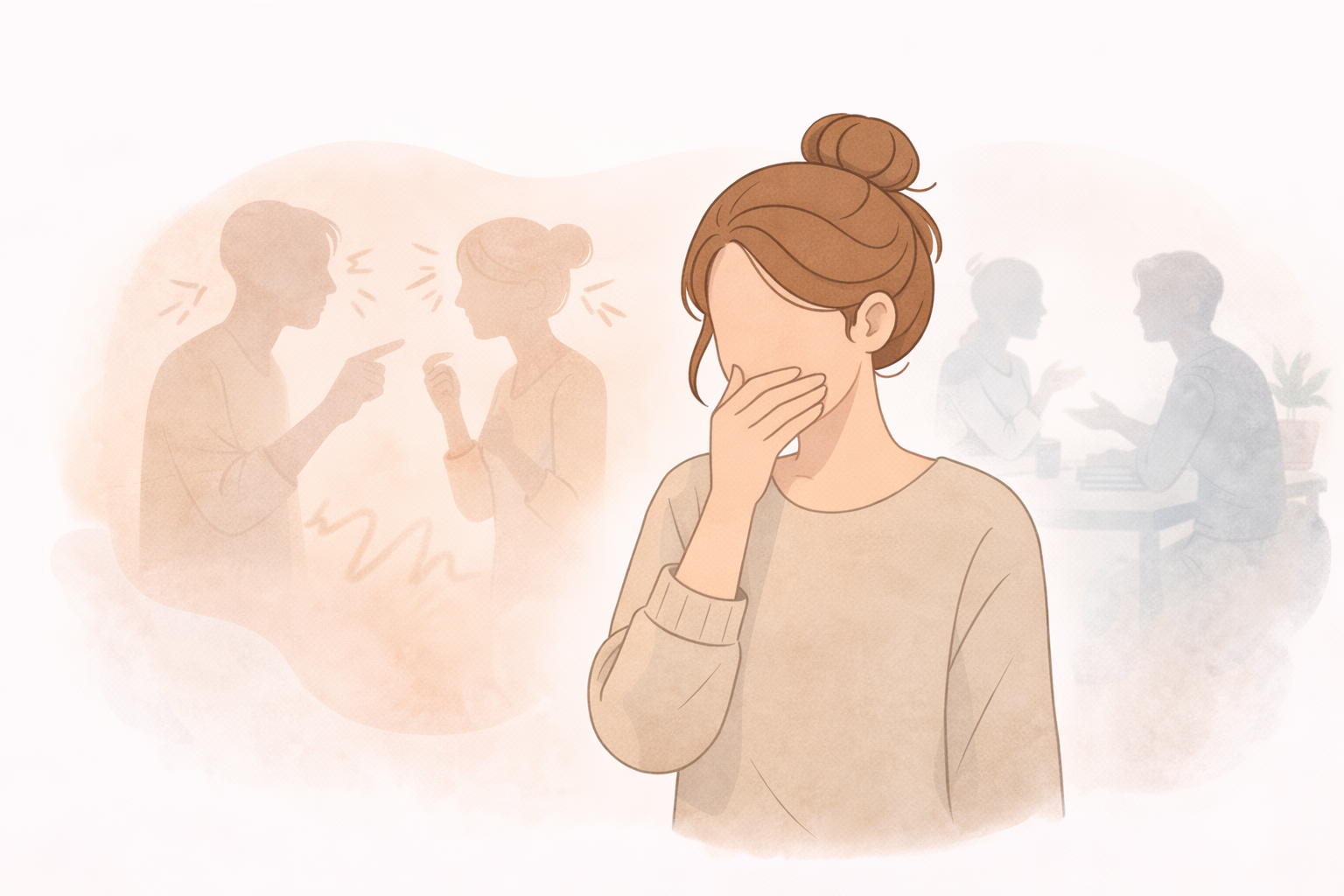
Conflict avoidance refers to the habit of avoiding disagreement, confrontation, or uncomfortable conversations. Rather than addressing a problem head-on, individuals may change the subject, withdraw, or suppress their needs. While this approach may reduce tension in the short term, it often allows interpersonal conflict to grow beneath the surface.
In psychology, this pattern is often linked to attachment style psychology and early relationship dynamics. Research on attachment theory suggests that individuals with anxious or avoidant attachment patterns may struggle to express needs or engage in conflict resolution openly (https://www.apa.org/topics/attachment). These patterns are not flaws in personality—they are learned responses shaped by past experiences.
For example, someone raised in a home where arguments felt unsafe may learn to suppress their voice to maintain stability. Over time, this can evolve into difficult conversation avoidance, where expressing disagreement feels threatening even in otherwise healthy environments.
In Canada, cultural norms around politeness and emotional restraint can also influence conflict behaviour. In diverse communities such as Toronto, Ottawa, Hamilton, Brampton, Milton, and Markham, individuals from collectivist or multicultural backgrounds sometimes prioritize harmony over confrontation. While this can promote empathy, it may also reinforce avoidance patterns if emotional needs are repeatedly set aside.
Here’s Zainib’s perspective from a non traditional Canadian side:
Many folks I support are folks from racialized communities, children of immigrants, who have not grown up with social expectations or cultural expectations that have made it difficult at times to negotiate with family members, especially their parents.The reason this is difficult is it’s usually seen as a sign of disrespect in many cultures. To remedy these issues, a lot of the work that we do together is understanding the nuance and the sensitivities, honouring cultural backgrounds and being creative about the ways in which we have to acquire skills that help us navigate difficult situations. This is done in a way that allows for space and respect on both sides of the equation.

Many people do not recognize conflict avoidance until the pattern begins affecting their relationships or emotional health. Therapists often notice the following behaviors in clients struggling with handling conflict:
These patterns are particularly common among individuals dealing with perfectionism anxiety, criticism sensitivity, or abandonment anxiety, where the fear of rejection outweighs the need for honest communication.
Many clients also report replaying conversations repeatedly afterward—an experience linked to rumination causes and overthinking psychology. This mental replay can lead to fake scenarios in your head, where imagined outcomes feel more threatening than the actual conversation would have been.
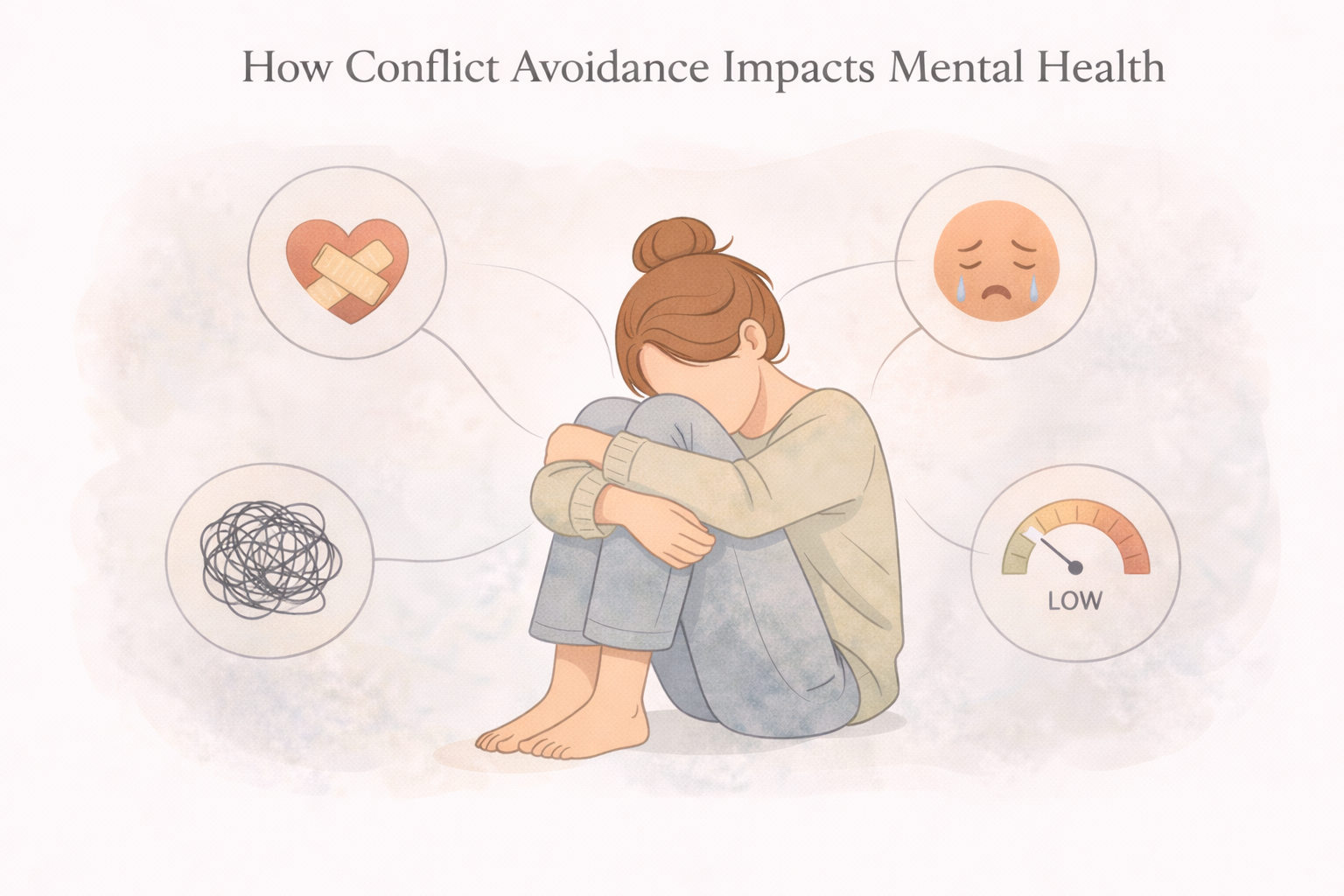
When interpersonal conflict is repeatedly avoided, the emotional cost accumulates quietly. At first, avoidance may feel like a successful strategy because it prevents arguments. However, the long-term effects often include increased stress and emotional fatigue.
Therapists frequently see conflict avoidance contribute to:
People who consistently suppress their needs often experience the emotional burden of being the strong one in relationships. Over time, this emotional labor can lead to invisible burnout or a slow burn breakdown where exhaustion builds gradually.
Some individuals also develop patterns similar to quiet quitting mental health, where they remain present in relationships but disengage emotionally. While this may protect them temporarily, unresolved resentment often resurfaces later in more intense forms of conflict.
According to research summarized by the National Institute of Mental Health, chronic emotional suppression can contribute to anxiety, stress, and depressive symptoms (https://www.nimh.nih.gov/health/topics/stress).

Learning to address conflict constructively is a core focus of many therapeutic approaches, including cognitive behavioural therapy (CBT) and trauma-informed therapy. Rather than teaching clients to confront others aggressively, therapy focuses on building communication skills, emotional regulation, and healthy conflict management.
Therapists often begin by helping clients reframe conflict as a normal part of life rather than a threat to relationships. When approached respectfully, healthy conflict can actually strengthen trust and understanding.
For example, one client working with a therapist described difficulty raising concerns with a co-worker. Each time a problem emerged, she avoided discussing it and instead took on extra work. Eventually, this pattern led to burnout and frustration within the work relationship. Through therapy, she practiced expressing concerns calmly and collaboratively, which ultimately improved both her professional relationships and her self-esteem.
The therapeutic process often involves several steps:
Here is one of Zainib’s go to strategies to help with conflict avoidance:
One of my favorite things to do in therapy is to support clients by being a mirror and by being a practice partner with them so that we can “trial run” their resolution through me. This allows us to address certain problems in their life, and regulate themselves in a safe and secure space. As we continue to do these “trial runs”, with myself providing firm and pointed feedback - my clients become better and more articulated at voicing their opinions in an appropriate manner.
Why Work With a Licensed Canadian Psychotherapist?
In Canada, therapists operate under regulated professional standards designed to protect client safety and confidentiality. Depending on the province, therapists may hold credentials such as Registered Psychotherapist (RP), Registered Social Worker (RSW), or Canadian Certified Counsellor (CCC).
Licensed professionals follow ethical codes and privacy laws such as the Personal Information Protection and Electronic Documents Act (PIPEDA) when providing virtual therapy. Many therapists are also listed in directories such as Psychology Today, which allows clients to review credentials, areas of expertise, and treatment approaches.
Working with a licensed professional ensures that therapy remains evidence-based, trauma-informed, and aligned with recognized clinical frameworks.
Conflict avoidance therapy can benefit many people navigating complex interpersonal dynamics.
It is particularly helpful for:
Regardless of background, learning how to address disagreements respectfully can significantly improve long-term well-being.
If conflict avoidance patterns feel familiar, speaking with a therapist can help clarify why these behaviors developed and how to change them. Therapy is not about forcing confrontation—it is about learning how to communicate honestly while maintaining respect for yourself and others.
Many therapists offer both in-person and virtual sessions across Canada, and some provide introductory consultations to determine whether the therapeutic relationship feels like a good fit.
Zainib’s closing remarks on this topic:
I love sharing the reminder with clients that I support interpersonal conflicts and conflicts in relationships. You really just need to acquire skills, and these skills can be learned, can be practiced, and they can be mastered. Learning a new skill is always exciting, and many of my clients walk away feeling empowered. The most beautiful thing is seeing the level of joy and pride that is experienced when small and big conflicts are managed effectively, and we are feeling more connected and closer to people in our life, but also more grounded and confident in our own abilities to manage difficult situations and relationships.
Conflict avoidance refers to the tendency to avoid difficult conversations or disagreements in order to maintain peace. While this strategy may reduce tension temporarily, it often leaves unresolved issues that eventually surface in relationships.
Anyone can develop conflict avoidance, but it is common among individuals who identify as a people pleaser or who struggle with people pleasing psychology. These individuals often prioritize harmony and may fear rejection, criticism, or emotional tension.
The root causes of conflict avoidance often relate to early experiences, attachment style psychology, and learned emotional responses. For some individuals, abandonment anxiety or past conflict experiences shape how they respond to disagreements later in life.
Conflict avoidance itself is not inherently toxic. It often develops as a protective coping strategy. However, if the pattern prevents honest communication or leads to resentment, it can create long-term relationship strain.
Canadian workplace laws generally protect employees from discrimination based on mental health conditions. Employers are expected to provide reasonable accommodations where appropriate, according to provincial employment standards and human rights legislation.
People avoid conflict for many reasons including fear of rejection, criticism sensitivity, past trauma, or emotional discomfort. For some individuals, avoidance also stems from trust issues psychology or a learned shutdown response during stressful conversations.
Self-esteem refers to how individuals evaluate their own worth and abilities. Healthy self-esteem often supports stronger communication and the ability to navigate conflict constructively.
Developing emotional awareness, practicing assertive communication, and learning to reframe conflict as a normal part of life can help individuals move toward healthier conflict resolution. Therapy can also provide a safe environment to practice these skills.
Yes. Research on emotional regulation suggests that learning to tolerate discomfort during disagreements can improve relationship stability and emotional resilience.
Therapy often helps individuals understand the psychological patterns behind conflict avoidance and practice healthier communication strategies. Over time, these skills make it easier to approach interpersonal conflict constructively.
Learning assertive communication and developing conflict management strategies can help individuals engage in healthier conversations with romantic partners, friends, and colleagues.
Changing conflict patterns involves building emotional tolerance for discomfort and recognizing that healthy conflict can strengthen relationships rather than destroy them.
Join our Nest to learn more about:


