
Note: Any real examples of clients have been annoymized to protect their privacy
Autumn can bring beauty, structure, and relief. The return of familiar routines, cooler evenings, changing leaves, and sweater weather can feel grounding after a busy summer. Yet the same season can also bring shorter days, heavier workloads, financial pressure, loneliness, grief, family expectations, or a noticeable shift in mood and energy. If autumn feels more complicated than a pumpkin spice latte, a walk through fall foliage, or an afternoon of apple picking, you are not doing the season wrong.
Seasonal transitions ask the mind and body to adapt to several changes at once. Daylight becomes less available, schedules tighten, children may return to school, work projects accelerate, and the first signs of holiday pressure begin appearing before many people have caught their breath. For someone already living with relationship anxiety, productivity anxiety, criticism sensitivity, or the feeling of being stuck in life, this adjustment can make ordinary responsibilities feel unexpectedly demanding. What looks like a motivation problem from the outside may actually be a nervous system trying to manage too much change with too little recovery.
Wellnest’s therapists created the Autumn Self-Care Workbook to help you understand how seasonal change affects you personally. Rather than prescribing an ideal routine, the workbook helps you notice patterns, establish gentle daily anchors, prepare for low-energy days, and create a support plan that fits your culture, responsibilities, relationships, and real life. It turns broad autumn self-care tips into something more useful: a plan you can return to when remembering what helps already feels difficult.
Download the Free Autumn Self-Care Workbook
Here’s Zainib, our lead therapist – opening thoughts on moods changing in the fall:
It’s really common for folks to feel a bit of disappointment in the change of output or pace within their own system when there is a transition that happens in the fall, and when the expectations at work, and perhaps even school starting, tend to start increasing and demanding the same level of productivity.
It’s really important to understand that we are a part of nature, and that we also have natural rhythms.
For women, for instance, we have rhythms throughout the month through our cycles, but we also have rhythms throughout the day, just our circadian rhythms. For men, there is also a circadian rhythm that dictates that rhythm.
We are connected with nature, and so changes in light, changes in melatonin, which happen to correspond to seasons, actually impact us biologically.
So it’s really important to turn towards ourselves and understand the biology of that, but also understand the symbols that the natural order has for us to contemplate.
Just like nature, we move in rhythms, and it’s actually quite natural and healthy to not have the same expectations for ourselves with every season that we experience throughout the year.

Autumn self-care is not about making your life look beautiful from the outside. It is not measured by whether you own a fall-scented candle, bake with sweet potatoes, visit a farmers market, or complete every item on a carefully arranged fall bucket list. Those experiences can be comforting, but they are not requirements for emotional health. Self-care begins with a more practical question: what do your body, mind, relationships, and responsibilities need as daylight, schedules, weather, and expectations change?
For one person, the answer may involve protecting sleep and taking a short walk outside before the sun sets. For someone else, it may mean asking relatives to share the emotional labour of planning family gatherings rather than quietly managing every detail. Another person may need to reduce social commitments because the return of school events, work functions, and holiday preparation is creating social burnout. The right form of care depends less on what looks seasonal and more on what makes daily life sustainable.
This is why a self-care routine should support your actual capacity instead of reflecting an imagined version of you. A long evening ritual involving meditation, journalling, essential oils, a face mask, and a bubble bath may sound restorative, but it can become another source of pressure when you are exhausted. On some days, self-care may simply mean eating something nourishing, taking medication, opening the blinds, and sending one honest message to someone you trust. A plan works when it can shrink with you rather than disappear when your energy drops.
Autumn care may also involve honouring grief, culture, family, faith, and community. Not everyone celebrates the same holidays, feels represented by dominant seasonal traditions, or experiences family gatherings as safe and comforting. Some people are navigating emotionally unavailable partners, estrangement, caregiving, migration, religious expectations, infertility, loss, or anniversaries that become more noticeable at this time of year. Self-care must have room for these realities or it risks becoming decorative advice rather than meaningful support.
The larger purpose is preparation. Autumn offers an opportunity to notice what is becoming harder before winter arrives, identify the supports you may need, and make a realistic plan while you still have some capacity to do so. This is different from trying to optimize every part of your life. It is an invitation to slow down, pay attention, and respond with care.
Zainib’s perspective is unique on this topic, as she consistently deals with a variety of races, creeds, religions and sexualities:
In all traditional societies, cultures, and wisdom traditions, we find that aligning human beings with the natural order around them is a path towards healing.
Often, when we are in misalignment with the natural order around us, we experience great distress, negative emotions, and difficulties on many planes.
And so, it can be really powerful and important to reclaim the traditional wisdom that many of us have within our own traditions, and to learn a little bit more about the way in which our ancestors thrived and made meaning of themselves within the context of the natural order around them, and how they cared for themselves at different seasons.
We don’t have to reinvent the wheel. We can start to look at the ways in which our predecessors took care of themselves, the practices that they engaged in, what they planted, what they harvested, and how they cared for themselves.
For instance, we can look at how they brought warmth into the body during cold seasons, and the types of recipes that they passed on.
And if those traditions haven’t been passed on, then now, with access to knowledge, we can start to engage with them more.
We can also look at how our predecessors behaved, how they showed up, and how they interacted with the nature around them.

Reduced daylight is one reason autumn can feel different, but it is rarely the only factor. Seasonal affective disorder, commonly called SAD, is a form of depression that follows a recurring seasonal pattern, most often beginning in fall or winter. Researchers continue to study its causes, but changes in daylight, circadian rhythms, serotonin regulation, and melatonin are believed to be involved. The Centre for Addiction and Mental Health notes that seasonal affective disorder usually occurs during the same season each year and may affect mood, sleep, cognition, and energy.
That does not mean every autumn mood change is seasonal affective disorder. A person may feel more tired because their commute now happens in darkness, their children have returned to school, their workload has increased, or colder weather has reduced their usual outdoor movement. Someone who spent summer seeing friends regularly may suddenly find that everyone is busier and social plans require more effort. The goal is not to identify one simple cause, but to understand what your support plan needs to account for.
Autumn can also bring psychological pressure to “reset.” Social media is filled with new routines, productivity systems, home organization projects, fitness challenges, and aesthetic images of an orderly seasonal life. For someone experiencing validation Seeking or people pleasing psychology patterns, this can create another standard to perform rather than an opportunity to rest. They may buy supplies, redesign their schedule, agree to too many commitments, and then interpret normal difficulty maintaining the plan as evidence that they have failed.
Consider someone who returns from summer determined to become more disciplined. They wake early, begin daily yoga, plan elaborate meals, volunteer for a committee, agree to host Thanksgiving, and promise themselves a complete digital detox. For several days, the structure feels energizing; then work becomes demanding, sleep slips, and the routine collapses. What they learn is not that they lack discipline, but that the plan was designed for their highest-capacity days and had no room for fatigue, caregiving, illness, grief, or ordinary unpredictability.
This is where decision fatigue becomes important. Every additional rule requires another choice: when to exercise, what to cook, whether to attend an event, how long to meditate, when to stop working, and whether a day “counts” as successful. When the mind is already adjusting to seasonal change, too many decisions can consume the energy that the routine was supposed to preserve. A few repeatable supports often provide more stability than a complete lifestyle overhaul.
Autumn may also make unresolved emotional patterns more visible. Conflict avoidance can become harder to sustain as family gatherings approach. Over apologizing may increase when someone feels responsible for everyone’s comfort. Emotional flooding may happen more quickly when a person is tired, overstimulated, or carrying expectations they have not expressed. These experiences are not signs that someone is “too sensitive”; they may be signals that their capacity, environment, and boundaries need attention.
Zainib has a different perspective on the situation:
I can’t speak enough to the number of clients I’ve had in my therapy room who, just in these past two weeks alone, have come in with a recognition, or at least an acknowledgment, that something was changing in their pace.
They’re feeling a need to be slower. They’re noticing the change around them, but they’re not necessarily linking the seasonal change itself to what is impacting how they’re showing up and feeling inside.
It can often be so empowering, and also caring, to start to compassionately look at ourselves as a part of the natural order around us, and to look at our experience as sacred. We require that rest and slowing of pace to be able to bring forth the fruits of our labour.
I also think that when we’re coming out of summer, it’s actually a time to integrate some of the work, movement, and socializing that took place, and to allow it to settle into the system. It’s an opportunity for us to invite a bit of slowing down.
A lot of times, when that change in pace happens without that awareness, it can be accompanied by a lot of judgment.
But it is often so empowering for people when it is accompanied by a sense of understanding of what is happening in the environment around them.
The most useful place to begin is not with a new habit but with observation. Ask yourself when you usually notice a shift in mood or energy and what seems to change first. For some people, sleep becomes irregular; for others, appetite, motivation, concentration, patience, or the desire for connection changes. The earlier you can recognize your pattern, the easier it becomes to respond before the season feels unmanageable.
You might notice that you begin cancelling plans in late October, staying in bed longer after daylight saving time, or struggling to concentrate once your commute takes place in darkness. You may find yourself replaying conversations, worrying about upcoming gatherings, or imagining fake scenarios in your head about conflicts that have not happened. These observations are not diagnoses. They are information about where your support may need to become more intentional.
Rumination deserves particular attention because it can disguise itself as preparation. People often believe that repeatedly thinking through a problem will eventually create certainty, but rumination usually circles the same threat without producing a new decision. Common rumination causes include unresolved stress, uncertainty, perfectionism, shame, relationship insecurity, and attempts to prevent future criticism. When fatigue increases, the mind may have fewer resources available to step out of those loops.
One workbook user might notice that their first seasonal warning sign is not sadness but irritability. They become less tolerant of noise, delay responding to messages, and feel overwhelmed when plans change. By identifying that pattern early, they can simplify evenings, move certain commitments, tell a partner what is happening, and book support before irritability turns into withdrawal or conflict. The change matters because the person stops treating each difficult day as an isolated failure and begins responding to a recognizable pattern.
The Autumn Self-Care Workbook includes seasonal reflection prompts to help you map these changes. You will be invited to consider what becomes harder, what helps even slightly, and what you want to put in place before the season grows heavier.
Workbook Reflection:
When do I usually notice a shift in mood or energy?
What changes first: sleep, appetite, motivation, concentration, patience, or connection?
Which routines become harder to maintain?
What helps, even slightly?
What would I like to put in place before the season feels more difficult?
Map Your Seasonal Pattern in the Free Workbook

A daily anchor is a small action connected to a reliable point in your day. It might be opening the blinds after waking, eating breakfast with medication, stepping outside after lunch, sending a message during your commute, or lowering the lights before bed. Anchors are different from ambitious routines because they do not require you to perform a long sequence perfectly. Their value comes from providing continuity when the rest of the day changes.
Morning light can be a useful anchor because autumn days become shorter and many people begin spending more time indoors. A realistic wake-time range may also help protect the rhythm of your day without creating anxiety about waking at the exact same minute. Meals, medication, stretching, or brief mindfulness can then be attached to cues that already happen. This reduces the number of choices you must make when your energy is low.
Imagine a student whose autumn plan originally includes an hour-long morning routine. When midterms begin, the routine disappears entirely, and the student feels as though they have lost control. They replace it with three anchors: opening the curtains, eating something before class, and taking one deep breath before checking notifications. The new routine is less impressive, but it survives busy days, which makes it far more protective.
Anchors can also reduce productivity anxiety. Instead of asking whether you completed enough healthy behaviours, you know that a few essential points of care are built into the day. That predictability may leave more mental energy available for work, parenting, school, relationships, or rest. The purpose is not to make every day identical; it is to create a few places where you do not have to start from zero.
Your routine does not need to include a scented candle, an elaborate gratitude journal, a perfect meal, or thirty minutes of meditation to count. Those practices may be enjoyable when you have capacity, but they should not become evidence you use against yourself on harder days. Consistency becomes more compassionate when the action is small enough to remain possible.
Here’s Zainib’s perspective on routines being important for seasonal changes:
The change in seasons most certainly demands a different way to show up socially because of our changing pace, our energy, our need for sleep, and the slow move towards rest.
And so, it can be really helpful to start to look at commitments with a little bit more consideration of: What experiences actually energize me? And what experiences tend to deplete me, or maybe demand a lot of energy from me?
Can I hang out in smaller groups? Or can I lessen the commitments to create more space for the change in my system?
This could be a really caring way of turning towards our nervous systems. And we often reap the benefits when we are turning towards ourselves in this way, because we notice that we have more capacity within our systems to actually meet the demands of the changes that are happening around us.
But also, we tend to experience more feelings of contentment, or joy, or gratitude when we’re able to connect to ourselves and meet our needs in this way.
A minimum viable day is a plan for days when your energy, motivation, concentration, or emotional capacity is significantly lower than usual. It asks what you need to remain cared for, not what you need to achieve an ideal day. This shift is important because difficult periods often lead people to become stricter with themselves just when flexibility is most necessary. They add pressure in an attempt to regain control, then feel worse when they cannot meet the new standard.
Your minimum viable day might include water, food, medication, rest, a shower, or two minutes of stretching. For your environment, it might mean opening the blinds, turning on a lamp, tidying one surface, or moving to the brightest room. Connection might be one text message, sitting beside someone without talking, or telling a trusted person that you are having a low-capacity day. Meaning might involve completing one purposeful task or spending a few minutes with something connected to your values.
Suppose someone normally cooks balanced dinners but begins relying on snacks when their mood drops. Rather than telling themselves to prepare an elaborate meal, they create a list of manageable comfort foods: frozen soup, toast with eggs, pre-cut vegetables, stews from the freezer, or a baked sweet potato. They are not lowering their worth or “giving up.” They are reducing the distance between having no plan and receiving basic nourishment.
This approach can be especially helpful for someone experiencing criticism sensitivity. When care is framed as all-or-nothing, every unfinished task can feel like a personal judgement. A minimum plan changes the question from “Why can’t I do more?” to “What would help me remain supported today?” That distinction can interrupt shame and make it easier to begin.
A minimum viable day is not meant to become your permanent ceiling. It is a bridge that helps you move through lower-capacity periods without abandoning yourself. The workbook provides space to build your own version in advance, when identifying food, environmental, connection, and support options is easier.

Everyday daylight exposure is not a cure-all, but it can be a meaningful part of a seasonal support plan. Open your blinds after waking, work closer to a window when possible, step outside earlier in the day, or take a brief walk before sunset. Even a few minutes of fresh air can mark a transition between parts of the day and reduce the sense that autumn is happening entirely from inside a room. The point is not to force yourself outdoors for a prescribed amount of time, but to notice how light affects your alertness, mood, and sleep.
A person working from home may not realize that they have gone several days without leaving during daylight. They begin taking a ten-minute walk outside after lunch, not as a fitness target but as a way to experience natural light and create separation between meetings. The walk does not solve every source of stress, but afternoons begin to feel less compressed. What they learn is that a small environmental adjustment can support mood without requiring a major behavioural transformation.
Clinical light therapy is different from opening a window or walking outdoors. The National Institute of Mental Health identifies light therapy as one treatment for winter-pattern SAD, while also noting that treatments should be discussed with a healthcare provider. People with bipolar disorder, certain eye conditions, or medications that increase light sensitivity should seek individualized guidance before beginning light therapy because light exposure may require monitoring or adjustment.
Vitamin d is also frequently discussed in relation to seasonal mood, but it should not be treated as a universal solution. The NIMH notes that evidence regarding vitamin D supplementation for SAD is mixed, and individual needs can vary based on health, diet, sun exposure, and existing levels. A healthcare provider can help determine whether testing or supplementation is appropriate rather than relying on a generic seasonal dose.
Light works best as one part of a larger support plan. Sleep, food, movement, connection, therapy, medication when prescribed, and reduced overstimulation may all matter. When advice focuses on one intervention as the answer, people may blame themselves if their symptoms continue. A more responsible approach recognizes that seasonal mental health is influenced by biology, environment, relationships, stress, and lived experience.
Movement can support mood, sleep, stress regulation, and overall health, but it does not need to be intense to count. Stretching beside your bed, taking the stairs once, doing gentle yoga, dancing to one song, completing mobility exercises, or walking around the block are all legitimate forms of movement. A hike through fall foliage may feel restorative on a high-energy weekend, while standing and stretching for two minutes may be the appropriate choice on a difficult Tuesday. The body does not require a picturesque setting to benefit from being moved with care.
The World Health Organization includes physical activity among the everyday behaviours that can support health and well-being, alongside sleep, nourishing food, risk reduction, and social connection. That broad framing matters because movement should be understood as one part of care rather than a punishment for eating comfort foods or being less active during colder weather.
Consider someone who has always treated exercise as an all-or-nothing project. In September, they join a demanding program, miss several sessions when work becomes busy, and stop moving altogether because anything less feels pointless. Their therapist helps them identify a capacity-based menu: a longer class when energy is high, a neighbourhood walk when energy is moderate, and stretching at home when it is low. The result is not perfect consistency, but a more stable relationship with movement.
Walking with a friend or family member can also combine physical activity with connection. You might visit a farmers market, walk outside while drinking apple cider, or take a brief route through your neighbourhood. These seasonal elements can make movement enjoyable, but the benefit does not depend on creating a perfect autumn experience. A ten-minute walk around an apartment hallway still counts.
Movement becomes less supportive when it is attached to shame, rigid tracking, or the belief that rest must be earned. If your body is ill, injured, disabled, depleted, or recovering, the most appropriate care may be rest or guidance from a qualified provider. Matching movement to capacity protects its role as support rather than turning it into another test you can fail.
Autumn can make connection harder. People return to school, projects accelerate, daylight ends earlier, and spontaneous outdoor time becomes less common. Someone who felt socially connected in summer may find that every interaction now requires planning. For a person already experiencing social burnout, even a supportive invitation can feel like another demand.
A connection ladder gives you options at different levels of effort. The lowest step might be reacting to a message, sending a short check-in, or sharing a voice note. A middle step might involve sitting in a shared space, making a short phone call, or attending an event briefly with permission to leave. A higher step might involve making a plan, reconnecting with a faith or cultural community, joining a support group, volunteering, or booking a therapy appointment.
This framework avoids the assumption that connection must always mean socializing at full capacity. Someone may not have the energy for a long dinner but may be able to walk with a sibling for fifteen minutes. Another person may not want advice but might appreciate sitting with a friend while each person completes their own task. Connection can be quiet, practical, spiritual, cultural, digital, or professional.
A connection ladder can be particularly useful when anxiety produces fake scenarios in your head. You may imagine that a friend is angry because you have replied slowly, that declining an invitation will end the relationship, or that you must sound cheerful before reaching out. A small action provides new information: perhaps the friend responds with warmth, understands your capacity, and is relieved to hear from you. The lesson is not that every fear is unfounded, but that connection does not always require you to resolve every anxious thought first.
Connection also needs boundaries. People pleasing psychology can lead someone to accept plans that leave them depleted because disappointing another person feels unsafe. Over time, this creates resentment, withdrawal, or emotional flooding. A sustainable connection ladder includes the right to shorten a visit, decline an invitation, ask for a quieter plan, or choose me time without constructing an elaborate justification.
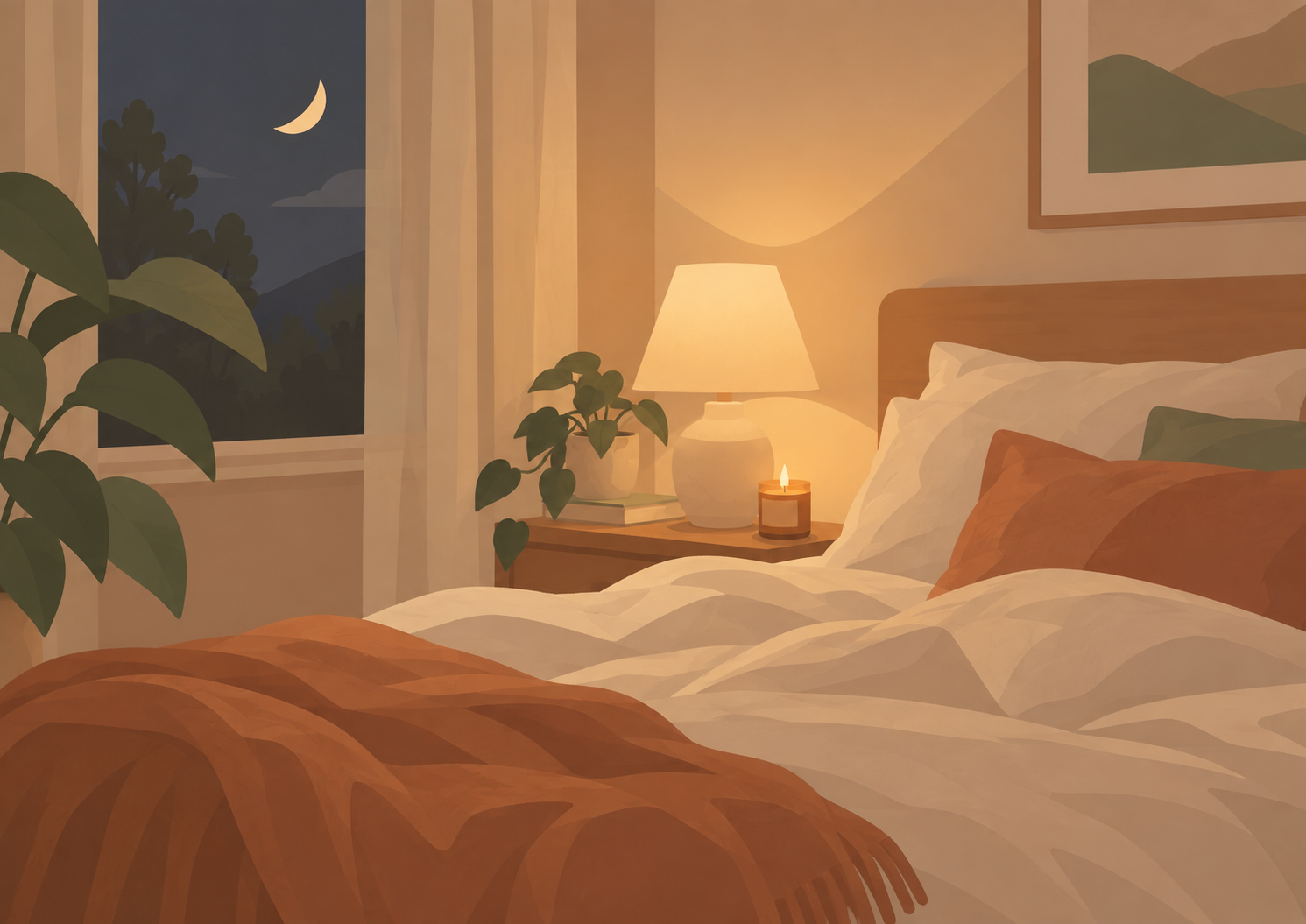
Darker evenings can create an odd contradiction: the body may feel tired while the mind remains activated. Work messages, school assignments, news, social media, streaming, family responsibilities, and constant notifications can prevent the nervous system from recognizing that the day is ending. Late-night scrolling may feel like the only personal time available, especially for caregivers or people who spend the day responding to others. Yet it can also delay sleep and expose the mind to more stimulation when it needs a gradual transition.
A repeatable wind-down cue can help. This might mean dimming a light, washing your face, preparing one item for tomorrow, changing into comfortable clothing, making caffeine-free tea, or lighting a scented candle if fragrances feel safe and pleasant to you. A bubble bath, face mask, essential oils, or quiet meditation can be part of the ritual, but they are optional. The most useful cue is one that tells your body the day is changing without becoming a complicated performance.
A digital detox does not need to mean abandoning technology for a weekend. It may involve setting a stopping point for work messages, charging your phone away from the bed, removing one stressful app from the home screen, or choosing twenty minutes without scrolling. A practical Digital detox guide should help you change your relationship with technology rather than shame you for using it. Technology may also provide accessibility, cultural connection, safety, work, or social support, so reducing use should be thoughtful rather than absolute.
For example, a parent may stay online after their child falls asleep because it feels like their only uninterrupted me time. They decide that giving up their phone entirely would feel punishing, so they create a smaller boundary: social media ends at 10:30, but an audiobook remains available. They also prepare breakfast before bed, reducing one decision in the morning. The lesson is that an evening boundary succeeds when it preserves something the person needs, not when it removes every source of pleasure.
Mindfulness can support this transition by helping you notice what state you are in before selecting an activity. Are you seeking stimulation, avoidance, comfort, information, or connection? Sometimes scrolling is a reasonable choice; other times, your body may be asking you to slow down. The purpose is awareness, not perfect digital discipline.
Also download Wellnest’s Digital Detox Guide
Holiday stress rarely begins on the day of a gathering. It develops through weeks of assumptions, invitations, financial decisions, travel plans, unresolved conflict, and invisible work. Someone may be expected to organize food, remember gifts, coordinate schedules, manage children, protect a relative’s feelings, and keep the atmosphere pleasant. When this emotional labour goes unnamed, autumn can become exhausting long before any celebration takes place.
Not everyone experiences autumn holidays in the same way. Some people feel pressure to participate in traditions that do not reflect their culture, faith, family structure, or personal history. Others may love a celebration but still find hosting, spending, travel, or family dynamics difficult. Grief can also become more noticeable when traditions highlight who is absent or how relationships have changed.
Planning boundaries early gives you more choices. You might decide how much you can spend, how long you will attend, which conversations you will not participate in, whether you can host, and what support you need from a partner or relative. This is not about controlling every interaction. It is about reducing the likelihood that you will be forced to make important decisions while emotionally activated.
Conflict Avoidance can make early planning uncomfortable because stating a boundary may feel more dangerous than quietly enduring the event. Yet avoiding the conversation often moves the conflict inward. The person rehearses explanations, experiences relationship anxiety, becomes resentful, and may eventually reach emotional flooding during a seemingly minor moment. A respectful boundary offered earlier usually provides more room for adjustment than a distressed reaction after capacity has been exceeded.
Setting holiday boundaries may include saying, “We can come for two hours,” “I’m not able to host this year,” or “I’m not discussing that subject.” It may also involve asking a partner to carry an equal share of planning rather than waiting to be told each task. People who struggle with over apologizing can practise communicating a decision without repeatedly asking forgiveness for having needs. A boundary can be kind without becoming negotiable.

A support plan is most useful when it is created before symptoms become severe. When someone is exhausted, anxious, depressed, or overwhelmed, it can be difficult to remember what helped previously, decide whom to contact, or explain what is happening. Preparing this information in advance reduces the number of decisions required during a harder period. It also allows trusted people to support you more effectively.
Your plan might identify early warning signs, such as sleeping longer, losing interest in food, cancelling plans, becoming irritable, or struggling to begin basic tasks. It can include what usually helps, what tends to make things worse, people you can contact, and the name of your therapist, doctor, or healthcare provider. You can also note what you want others to understand and what you will do if symptoms become more severe. This transforms self-care from a collection of ideas into a sequence of possible next steps.
Imagine someone who notices the same pattern every November: their sleep shifts, messages go unanswered, and work begins taking twice as long. In previous years, they waited until January to seek help because each difficult week seemed temporary. This year, they schedule a healthcare appointment in October, tell a close friend what signs to watch for, and prepare simple meals for lower-energy weeks. The season is still challenging, but they no longer have to build support while at their lowest point.
A support plan should also be realistic about what self-care cannot do. A fall-scented candle, warm stews, hygge, apple picking, or a bubble bath may provide comfort, but they cannot replace clinical care when symptoms are persistent, worsening, or unsafe. Comfort and treatment are not competitors. A person can enjoy seasonal rituals while also needing therapy, medication, medical assessment, workplace accommodations, or crisis support.
The Autumn Self-Care Workbook guides you through each part of this plan. You can record your early signs, preferred supports, important contacts, boundaries, and next steps in one place. The value is not simply completing a worksheet; it is creating something your future self can use when clarity and energy are limited.
Autumn self-care advice becomes more useful when it becomes personal. A general article can suggest that you get daylight, stay connected, protect sleep, practise mindfulness, or create a self-care routine, but it cannot know which part of the season is hardest for you. Your challenges may involve energy, family expectations, emotional health, productivity anxiety, grief, loneliness, caregiving, or feeling stuck in life. The workbook gives you space to identify those differences.
Wellnest’s therapists created the Autumn Self-Care Workbook to help you reflect on your seasonal patterns, build gentle routines, prepare for low-energy days, and create support before the season feels overwhelming. It is designed to be used gradually rather than completed as another assignment. You might begin with one reflection page, return later to create a minimum viable day, and build your support plan when you have more information.
Inside the workbook, you will find:
The workbook is not a test of how well you practise self-care. You do not need to complete every page, develop the perfect morning, or transform your life before winter. Its purpose is to help you notice what is happening and make the next caring choice easier. Sometimes that choice will be a walk outside; sometimes it will be rest, a meal, a boundary, or asking someone for help.
Get the Free Autumn Self-Care Workbook
Seasonal Comfort Can Help—Without Becoming Another Standard
Autumn rituals can support the senses and create moments of pleasure. Warm lighting, a favourite sweater, fresh air, fall foliage, a fall-scented candle, apple cider, nourishing stews, or familiar comfort foods can provide cues of safety and continuity. A trip to a farmers market, a quiet hike, apple picking, or drinking a pumpkin spice latte with a friend may also create opportunities for movement, connection, or enjoyment. These experiences matter because small moments of pleasure can remind us that care is not only about preventing distress.
Scent can be especially tied to memory. Autumn may bring the smell of wet leaves, wood smoke, cool air, baked apples, cinnamon, cloves, soil, rain, or seasonal cooking. Some people find essential oils or a scented candle calming, while others experience headaches, sensory overload, allergies, respiratory symptoms, or difficult memories in response to fragrance. Sensory self-care works best when it responds to the individual rather than assuming the same smell is comforting to everyone.
Hygge is often described as a feeling of warmth, comfort, and togetherness, but it can become commercialized into a particular appearance. You do not need a carefully decorated home, expensive blankets, or a seasonal shopping list to create comfort. Hygge may be eating soup with a roommate, sitting under an old blanket, calling a relative, or sharing a quiet evening without pressure to entertain. The underlying need is warmth and ease, not consumption.
The same principle applies to a fall bucket list. A list can help you identify experiences you genuinely anticipate, such as volunteering, walking through a park, preparing sweet potatoes, or visiting a market. It becomes less supportive when it functions as proof that you enjoyed autumn correctly. You are allowed to skip activities, change plans, or discover that your most restorative seasonal experience is staying home.
Pamper rituals can also be meaningful without being treated as the definition of self-care. A face mask, bubble bath, skincare routine, or cup of tea can create a pause, especially when the person spends most of their day caring for others. However, these practices cannot resolve unfair workloads, unsafe relationships, untreated depression, or chronic stress on their own. Care is most effective when comfort is paired with attention to the conditions creating distress.
Seasonal change does not create every emotional pattern, but it can reduce the capacity people use to manage them. When sleep is disrupted and responsibilities increase, someone may become more reactive to criticism, uncertain relationships, or unresolved conflict. They might seek reassurance more frequently, replay conversations, or become preoccupied with whether others are disappointed in them. These are understandable attempts to find safety, but they can also intensify distress.
Validation seeking, for example, may look like repeatedly asking whether someone is upset, checking how a message sounded, or changing a decision until everyone approves. The relief provided by reassurance is usually temporary, which means the person has to seek it again. Autumn stress may make the cycle stronger because there is less emotional energy available for tolerating uncertainty. Therapy can help someone understand what reassurance represents and develop more stable ways of responding to fear.
People pleasing psychology often involves more than wanting to be liked. It can develop when approval, usefulness, harmony, or emotional monitoring became associated with safety. During autumn, the person may agree to host, organize, attend, spend, or provide care beyond their capacity. Their exhaustion then appears as irritability or withdrawal, even though the deeper problem is that they did not feel able to make their limits visible.
Emotionally unavailable partners may make seasonal stress feel especially lonely. Someone might ask for comfort but receive problem-solving, silence, defensiveness, or avoidance. They may then work harder to explain themselves, question whether their needs are reasonable, or take responsibility for repairing every disconnection. A self-care workbook cannot change a relationship by itself, but it can help a person clarify what they need, what patterns they notice, and where outside support may be important.
Rumination can also grow during quieter, darker evenings. The mind may return to old conflicts, imagine future rejection, or build fake scenarios in your head as an attempt to prepare for uncertainty. Understanding rumination causes does not mean you can simply decide to stop thinking. It means you can begin identifying the emotional need beneath the loop—certainty, reassurance, control, repair, safety, or permission to act.
Women’s therapy may be particularly relevant when seasonal stress intersects with gendered caregiving, invisible planning, emotional labour, fertility experiences, motherhood, workplace expectations, relationship roles, safety, identity, or cultural responsibility. This does not mean every woman has the same experience or that these pressures only affect women. It means therapy can provide space to examine how personal distress is shaped by relationships and social expectations rather than treating it solely as an individual failure.
Here’s what Zainib had to say about this:
Those factors can include, for instance, where we are in our menstrual cycles. Some of us are also more sensitive to certain seasonal changes just by our constitutions and our needs.
It could be harder on folks who are really extroverted to start to experience a shift in capacity, and it may take a little bit of time to adjust.
For those of us who may lean more towards time alone, and need a lot of time alone to recharge, we may notice that there is a greater pull to be less social.
And then, for others, there may be mental health concerns.
For some folks who, for instance, live with bipolar disorder, seasonal change can have a great impact on the onset of a manic episode or depressive episode, especially during the spring, for instance.
Or, for folks who are prone to seasonal depression, just the change in season and moving towards winter may start to signal something in the body, or alarm a person by connecting them to difficult experiences that they’ve had in the past. They may already start to have a bit of anxiety or experience depression symptoms.
It’s really important to look at our own individualized experience, but also to get the right care and support to help us move with care, consideration, and nuance when we look at our individual experiences with seasonal changes.
Autumn care does not exist in isolation. Someone searching for autumn self-care tips may also be trying to understand ways to combat seasonal depression, how to be more grateful, activities on self esteem, setting holiday boundaries, or whether a digital detox could reduce overstimulation. These concerns often overlap because they involve the same underlying questions: What is draining me? What helps me feel connected? What do I need to change, accept, communicate, or seek support for?
Learning how to be more grateful, for example, does not require denying pain or forcing positivity. A gratitude journal can help some people notice meaningful experiences, but it should not be used to argue against grief, anger, loneliness, or depression. A more balanced practice might acknowledge both realities: “Today was difficult, and the apple cider my friend brought me felt caring.” Gratitude becomes supportive when it expands awareness rather than silencing discomfort.
Activities on self esteem also work best when they move beyond generic affirmations. You might identify a decision you made thoughtfully, a boundary you maintained, a value you acted on, or a difficult day you moved through. Self-esteem can grow through evidence of self-trust, not only through repeating positive descriptions. During autumn, this may include honouring your capacity rather than comparing your routine with someone else’s.
A Digital detox guide can support emotional health when technology is contributing to comparison, anxiety, lost sleep, or constant availability. Yet a digital detox should not remove access to supportive communities, accessibility tools, cultural connection, or crisis resources. The better question is not whether technology is universally good or bad, but which forms of use leave you informed, connected, depleted, activated, or numb. That reflection can help you create specific boundaries instead of relying on a dramatic reset.
Mindfulness and meditation can provide ways to notice thoughts, emotions, and body sensations without immediately reacting to them. For some people, sitting quietly is useful; for others, mindfulness is more accessible during yoga, cooking, walking, prayer, art, or a sensory activity. These practices should not be used to tolerate harmful conditions indefinitely. Awareness is meant to help you recognize needs and choices, not to make every environment bearable.
Self-care can support many people during seasonal change, but it may not be enough when symptoms are persistent, worsening, or interfering with daily life. Consider speaking with a qualified mental health or healthcare provider if low mood lasts more than two weeks, changes in sleep or appetite are becoming disruptive, or motivation and concentration are making everyday responsibilities difficult. Support may also be important if you are withdrawing from relationships, struggling to care for yourself, or noticing that the same pattern returns each year.
Seasonal affective disorder is not simply disliking cold weather. It is a form of depression with a recurring seasonal pattern, most often beginning in fall or winter. Symptoms can include persistent low mood, reduced interest or pleasure, fatigue, sleep changes, difficulty concentrating, and changes in appetite or weight. A professional assessment can help distinguish SAD from other forms of depression, anxiety, sleep problems, physical health conditions, medication effects, grief, burnout, or overlapping concerns.
Speaking with a provider does not mean you have failed at self-care. It means you are using an appropriate level of support for what you are experiencing. Treatment for seasonal depression may include psychotherapy, light therapy, medication, or a combination depending on the person’s symptoms, history, health, and preferences. A workbook can help you organize observations and questions, but it is not a substitute for individualized assessment or treatment.
Seek more immediate support if you feel hopeless, disconnected, unable to remain safe, or are thinking about suicide. If you are in immediate danger or require urgent medical assistance in Canada, call 9-1-1. If you or someone you know is thinking about suicide, call or text 9-8-8 for support 24 hours a day, seven days a week.
Zainib cautions not to lump things together:
It is, of course, always incredibly important to distinguish seasonal changes in energy and capacity from a debilitating experience, such as an inability to function throughout the day, or a significant and noticeable change to our experiences across many facets of our lives, maybe at work, as well as at home, at school, or in our social lives.
And so, what is important is to look at the extent of that change, as well as whether or not it’s debilitating us or really impacting our level of functioning.
All of us experience some shifts, and to varying degrees, of course. Some of us may experience greater shifts than others based on many factors.
The Autumn Self-Care Workbook can help you notice patterns and begin building support. Therapy can help you explore what those patterns mean, understand what the season brings up, and develop strategies that reflect your culture, identity, relationships, responsibilities, and lived experience. It can also provide space to examine deeper concerns such as relationship anxiety, emotional flooding, Conflict Avoidance, Validation Seeking, criticism sensitivity, grief, productivity anxiety, or feeling stuck in life.
Wellnest offers culturally responsive therapy with a diverse team of therapists. Care is not based on the assumption that everyone has the same family structure, cultural expectations, faith, gender experience, relationship model, or access to resources. The aim is to understand the person within the context of their life rather than separating symptoms from the systems and relationships surrounding them.
You do not need to wait until autumn becomes unbearable. Therapy can be used to prepare for a predictable seasonal pattern, strengthen boundaries before family gatherings, understand recurring relationship dynamics, or build a plan for the months ahead. Seeking support early may give you more room to make thoughtful decisions rather than reacting from exhaustion.
Here are her closing remarks:
A kind reminder to you that your body is not supposed to move at the same pace through all seasons during the year.
You are very much a part of the beautiful, natural, seasonal order that you experience, and you are connected in nature.
You can find healing in even just reflecting on the beautiful way in which nature behaves and moves through the seasons.
And we can take in that care and understanding as a way of turning towards ourselves with compassion, but also with a greater understanding and perspective of what it means to move through life more mindfully, and with more connection to land, to our ancestors, and with greater understanding of the nuance of our experiences.
Good autumn self-care tips include noticing your seasonal pattern, building a few daily anchors, getting daylight when possible, choosing accessible movement, protecting your evening wind-down time, and staying connected in ways that match your capacity. It may also help to prepare simple comfort foods, plan holiday boundaries, reduce unnecessary decisions, and create a minimum viable day for periods of lower energy. The most effective plan is not the most aesthetic one; it is the one you can still use when the season becomes busy or emotionally difficult.
Autumn can feel emotionally different because daylight, temperature, routines, activity levels, and social patterns may all change at the same time. School or work pressure can intensify, family expectations may begin building, and grief or anniversaries may become more noticeable. Some people also experience recurring seasonal depression or seasonal affective disorder, particularly when mood and energy changes consistently appear during fall or winter.
Begin with small supports that protect basic functioning: a realistic sleep rhythm, regular nourishment, daylight when available, gentle movement, manageable connection, and less evening overstimulation. Notice whether you are becoming more isolated, reactive, anxious, or unable to complete everyday care. Speak with a qualified provider when symptoms persist, worsen, recur seasonally, or interfere with work, school, relationships, caregiving, or safety.
Yes. Seasonal change may affect mood, sleep, energy, motivation, concentration, and anxiety for some people, although the causes and severity vary. Reduced daylight may be one factor, but changes in routine, isolation, financial pressure, family stress, grief, and colder weather can also contribute. When symptoms last more than two weeks or interfere with daily life, professional support can help determine what is happening and which treatments or accommodations may be appropriate.
A workbook can help you identify patterns, track changes, create routines, plan for low-energy days, and record the people or services you may contact. Its main value is turning general advice into a plan that reflects your own needs. It is not a replacement for therapy or medical care, but it can help you prepare for appointments and recognize when additional support may be necessary.
There is no single clinically standardized set of “5 C’s” used across all mental health or healthcare settings. One practical way to remember autumn self-care is Care, Calm, Connection, Compassion, and Consistency: care for basic needs, create moments of calm, maintain connection, respond to yourself with compassion, and use small supports consistently. The framework is useful as a memory aid, but it should not override individual needs, disability, cultural practices, professional treatment, or the realities of someone’s environment.
The International Self-Care Foundation identifies seven broad pillars: knowledge and health literacy; mental well-being, self-awareness, and agency; physical activity; healthy eating; risk avoidance and mitigation; good hygiene; and the rational and responsible use of self-care products and services. These pillars show why self-care is broader than spa rituals or occasional relaxation. They include understanding your health, accessing appropriate care, reducing preventable risks, supporting the body, and making informed decisions about products and services.
Start by examining what may be contributing to the fatigue rather than assuming it is a motivation problem. Changes in light, sleep, workload, movement, nutrition, stress, illness, medication, caregiving, or mood can all matter, and persistent fatigue may warrant a healthcare assessment. In daily life, a realistic sleep schedule, morning light, regular meals, a short walk outside, gentle movement, fewer evening notifications, and a minimum viable day plan may help conserve energy while you identify the larger pattern.
Common autumn smells include wet leaves, soil, cool air, rain, wood smoke, apples, cinnamon, cloves, pumpkin, baked foods, and warm stews. A fall-scented candle or essential oils may help some people create a calming transition ritual because scent can be strongly connected to memory and emotion. Fragrance can also cause headaches, sensory discomfort, allergic reactions, respiratory irritation, or difficult memories, so scent-based self-care should always be optional and responsive to the individual.
Effective autumn self-care begins with noticing changes in sleep, mood, energy, concentration, appetite, and connection. Build a few anchors, get natural light where possible, choose movement that fits your capacity, protect evenings from overstimulation, and speak openly about the support you need. Preparing a seasonal support plan before symptoms become severe can also make it easier to contact a therapist, doctor, friend, relative, faith leader, or community resource when your energy is lower.
Choose practices that support your real needs rather than recreating an idealized version of autumn. You might prepare simple comfort foods, visit a farmers market, take a hike, practise yoga, declutter one small area, volunteer, enjoy a bubble bath, or write in a gratitude journal, but none of these activities are mandatory. Pair seasonal comforts with deeper forms of care, such as protecting sleep, sharing emotional labour, setting holiday boundaries, reducing social pressure, and seeking professional support when needed.
Morning daylight, regular nourishment, gentle physical activity, meaningful connection, and consistent sleep cues can all support overall well-being. Enjoyable seasonal activities such as apple picking, walking through fall foliage, sharing apple cider, making stews, or spending me time with a favourite book may add pleasure and structure. These strategies are supportive rather than guaranteed treatments, so continuing or worsening symptoms should be discussed with a qualified mental health or healthcare provider.
Reduce the number of habits you are trying to maintain and select two or three daily anchors instead. Create a minimum viable version of each practice—for example, two minutes of stretching instead of a full yoga session, one sentence instead of a full gratitude journal entry, or a five-minute digital detox instead of an entire weekend offline. Smaller options reduce Decision fatigue and make care more available on the days when you need it most.
No. Autumn self-care can support rest, routine, connection, and early awareness, but seasonal affective disorder is a form of depression that may require professional assessment and treatment. Evidence-based care may include psychotherapy, prescribed medication, light therapy, or a combination based on individual circumstances. A workbook may help you track symptoms and prepare questions, but it should not be used to diagnose or treat SAD independently.
Join our Nest to learn more about:


